Friday, April 17, 2015

Rolleiflex factory sale

I recently read that the Rolleiflex factory was being liquidated, this might come as no surprise to some as sales must have been small, I bet not many were aware that you could even buy a new Rolleiflex in 2015!
Still the passing of one of the all time greatest camera designs should be at least noted and even celebrated for the iconic status the camera achieved.
The list of great photographers that used these wonderful camera's is a long one, celebrated British photographer David Bailey said if he could just have one camera it would be a Rolleiflex.
Personally I feel an incredibly lucky to have owned and used one for many years, these cameras are a joy to own and use, there are no automated features to fall back on you really do make images with this camera; like flying a single seated aircraft you are on your own with your skill will define the way the image will look, no auto anything.
Life is too short not to have shot with a Rolleiflex, I have two and hopefully they will last me the rest of my life.
Here are some images from the liquidator of the Rollei factory

CNC Lathe


It's sad to see it all go, and know that an era has passed I guess that's what some call progress.


Wednesday, April 01, 2015

Found Kodachrome


Here are a few Kodachrome slides from the early 1960's that I recently found, for a larger image just click on the photo.

Sponge Seller, Athens, August 1966
I have attempted to display them as found with little or no colour correction or spotting and damage removal.

Fish Stall, Vico Equense, Italy, September 1963
Some old cars in this scene an oval window (1953-57) VW Beetle in a street probably Barcelona 1964

Spain 1964
This one is Rome looking towards St Peters, no date stamp and 'KODACHROME'

Rome mid 1960's ?
These slides had been stored in a box which was in storage since the late 1970's! There are a few more to sort though which I may share in a later post.

Wednesday, December 24, 2014

The Great Dynamic Range Mystery

Backdrop
I have been a photographer for over thirty five years, and during that time have come up against many problems and hurdles whilst practising my profession.
Recently I met and spent a social hour with an old photographer friend who showed me his latest Nikon (a lovely camera) and during the evening the conversation touched the subject of the range of tones that modern digital cameras could capture and how this related to the films we used to use for wedding and portraits.


There seem to be a consensus that digital  can record a wider range of tones than  negative films, which seems strange as that is far from the experience of most photographers I know who still use both mediums.

My friend pointed me to a site often used to back-up this assertion:

A test of film vs digital dynamic range

The linked web page from Mr R Clark states:
"Digital cameras, like the Canon 1D Mark II, show a huge dynamic range compared to either print or slide film, at least for the films compared"

A huge dynamic range? This is not what most people I know have observed!

The evidence put forward was a series of photographs showing a black box with test charts photographed on each medium the digital showing great shadow detail and good highlights the negative film showed OK highlights and non existent shadow.
(see website linked)


My first thoughts were how very strange quite the opposite to what I have observed-what could have happened?
The clue is early on in the text, he compares a digital camera, a slide film and a colour negative film and states:

"the three data sets are registered at the bright end. This is why the curves in Figures 8 and 10 overlay each other at the high end"

Now it begins to make sense why the author only sees the film has a range of seven stops–he used the same exposure for all three mediums so he has exposed for the highlights.

Let me explain; both digital and slide film need to be exposed so you don't clip highlight information and just end up with either clear film or saturated sensor wells, so you effectively expose for the highlights
Negative film on the other hand needs exposing for the shadow info and let the highlights fall on the upper part of the curve.


Expose negative film so the shadow falls in the toe
The correct way for Mr Clark to evaluate the DR of each medium would need very different different exposures for each medium; the one for the negative should place the darkest shadow in the toe of the curve so the shadow will be perfectly reproduced and because of the compression effect of the negative films shoulder the highlights will still be recorded.

My experience (and Kodak's figures) has shown that most negative films have a range of about 12-14 stops (albeit the top of the range is compressed). Negative films have a shoulder that means the highlight roll-off is very gradual  on the other hand digital has better shadow recovery so more detail given the same exposure.

So what Mr Clark has done here is exposed to give good highlight retention on the digital and used the same exposure on the negative film; thus showcasing the shadow recovery of digital and showing up the poor shadow of film when underexposing (the exposure values for each are different)

He has either deliberately or by accident truncated the film curve (used only the left part of the curve and placed the highlight on the 'straight line' of the curve this caused his underexposure and that is why he gets only seven stops of useable data rather than the fourteen Kodak cite

You could conversely do this 'experiment' again exposing the film correctly (expose for shadows and stop down 2 stops) and then expose the digital with the same exposure values thus blowing the highlights; this would give us a very different conclusion from Mr Clark's test.

I could verify Mr Clark's results by making my own 'black box' (that might be a future post) and placing the negative exposure on the correct part of the curve for that medium.

Here though are a couple of tests that show the effect:

Film and digital compared over a wider range than Mr Clark's test

And
A test showing film vs digital over the complete range (mentions Clark in the conclusion)


Tuesday, November 12, 2013

Weston Exposure meters


The Weston Company has a very interesting history, the founder was a British born American citizen Edward Weston an engineer with hundreds of patents to his name.

The company made a range of products from the speedometers used on Harley Davidson motorcycles to long life arc lamps.

As well as being a prolific inventor he was also a keen photographer and along with his son (he must have had some spare time) called Edward Faraday Weston they invented the worlds first photographic exposure meter in the early 1930's in fact the early prototypes were used on the film 'Gone with the Wind'.

Weston had two factories, one in New Jersey, America and one in Middlesex in Britain, the British model being slightly different and distributed by the Ilford Photo company.

Practical Use
Here at Photo Utopia we're not afraid to use antiquated photographic equipment; in fact it is one of the reasons for this blog.
The question a lot of you will be asking is why a handheld meter? Further to that why trust a meter that is over half a century old?
Don't they drift and become out of tolerance?
I have three meters currently, a Minolta spot, Sekonic Digilite and this one – a 1960's Weston, and I can honestly say hand on heart that this is one of the most accurate meters I've ever used at any price.

For everyday photography I normally use cameras with built in meters, even then a hand held is a great addition to you photo-bag.
It has a Selenium meter cell thus using no batteries–magic eye!

Concave invacone
For accurate metering hand held units with an invercone (the translucent white attachment) can be used to take incident light readings which overall I have found to be more accurate than the reflected type or the ones built in most older film SLR's.

Incident readings are taken with the meter cell (covered with an invercone) pointed at the camera, in other words they measure the light falling on the subject.
The Weston strength is the quality of the invercone which is a concave rather than domed device, and is more accurate because of that clever design.


Even in bright light with transparency film the Weston gives readings that are very accurate, tested against my other 'modern' meters confirms that fact.
Furthermore the dozen or so Westons I've tried or used over the last twenty years seemed similarly accurate, coupled to that I've been told if the needle functions the unit is probably OK

Rolleiflex 3,5F Provia 100 metered with a Weston
Most people are worried about using selenium meters of a certain age, but I've been quite lucky and have never found one that didn't work–others experiences may differ, but at the price these seem to go for on auction sites (I paid less than £10 for this one)  they make a cost effective choice for those who want to try a hand held meter.

©Photo Utopia 2013

Wednesday, August 14, 2013

Nikkormat EL


The Nikkormat EL was Nikon's first foray into the world of aperture priority (you set the ƒ number and the camera sets the speed) electronic cameras in 1972.

The model is a much overlooked by modern buyers compared its more glamorous FE/FE2 successors, perhaps people are worried investing in such an old electronic device fearing failure or out of tolerance forty year old electronics.

I decided to take a chance on one I found for less than £50 in a well known UK camera shop, after all the unit came with 6 month warranty–what could I lose?

My fears were totally unfounded, the camera arrived and checked out flawless against a known good meter all shutter speeds and mechanics seemed fine, the only issue I could see was the foam mirror dampener and possibly rear light seals so a kit was ordered from a well known auction site and fitted in less than an hour
at the cost of about £5.

The Nikkormat build quality is from another age, everything from the metal shutter dial to the re-enforced strap lugs are made to last even the shutter speeds are etched into the metal rather than just screen printed — everything feels solid.

Clear and easy to read controls, with a solid feel.
Another thing I like compared to the Nikkormat FT is the control placement, which to me is perfect, shutter dial top right (compared to lens mount) ASA dial under the re-wind knob (rather than on the fingernail breaking flange) with nice locks for the film door and ASA setting.
In use the camera feels very positive, the weight is well balanced with most common lenses and wind-on is smooth; the shutter... I just love the soft ssschtick sound just love it!

The batteries are very easy to get hold of type PX28/4SR44 which is a 6V cell. The Cds meter is a little tougher on batteries than later SPD types so you might like to keep a spare handy.

The metering is by match needle on the left of the large relatively bright screen:

In manual mode just line up the green and black needles

I put through a roll of Poundland Agfa Vista C41 and was pleasantly surprised by the results, the meter seemed pretty accurate, especially for one with a simple centre weighted area.


The best way to really give it a test is to put it on auto with a roll of E6; that type of film having less margin for error with exposure.
After all the main reason for buying the camera was to have a 'lazy' camera to take on holidays and trips.
Loaded with Agfa CT Precisa which is a budget slide film (actually made by Fuji) I took the film to the beach for the day:
Just about every frame came out perfectly
The automatic meter and Nikons early attempt at making the associated electronics have proven to be a very robust and durable one, my initial fears at buying a forty year old electronic camera were totally unfounded.

a nicely saturated well exposed slide.
So next time you see a Nikkormat EL for half the price of a later Nikon FE don't dismiss it out of hand because of its age, its a well made camera that should last many years of picture taking.

Tuesday, August 13, 2013

Agfa CT Precisa E6 film

This particular film can be found very cheaply in quite a few outlets, and although 'Agfa' by name is a totally different film from the boxes you may find of CT Precisa with the Agfa rhombus logo from before the bankruptcy most of which will be out dated by now.
This film is in fact made in Japan by Fuji and is actually a pretty good emulsion in its own right, probably very similar to RDP.

One of the things I've always liked about Fuji films is the way they render European skin tones, they accentuate the sun tan and coupled with the nice saturation give nice tones.

warm skin tones and good saturation
Beach huts in Blue


The colour saturation and to my eye accurate rendering of tones and colour make this film a little bit of a bargain, well worth getting a roll if you've never used E6.


Thursday, September 20, 2012

Found 1930's Glass Plates

Whilst out and about I came across some glass plates, all the same size and age (between 1932-34) they pre date ASA ratings so show the H&D (Hurter and Driffield) speed 1500 being roughly about 16 ASA.

Click on the image for a larger view
. What initially intrigued me was the boxes had the formulas for developers. The Ilford Double X Press plates have the formulas for several types of developer ID-1 ID-2 and ID4.

Click to enlarge

Similarly the Illingworth plates have formula's. Thomas Illingworth & Co were a British plate manufacturer, Thomas was from Halifax and had a photography business at 41 Crown Street in that town.
Later he moved to London and there he started his plate making business which he ran until his retirement in 1922. His eldest son Thomas Midgely Illingworth took over the business when his father resigned as Managing Director. (He died the following year.) Thomas Midgely Illingworth pursued a policy of co-operation with the larger firm of Ilford and became a Director of Ilford when the two companies amalgamated.
By the early 1930's they had been absorbed by the Ilford company, which is about the same time these plates were made.

Villages in Suffolk

The negatives are all of towns and villages in Suffolk, UK and mostly churches and large buildings  very few of the subjects have changed much in the 80 years and disappointingly there are not many images that have people or cars.

The condition of the plates is quite good

They have a feel of the era
Initially I thought I might take a trip to re-shoot some in this century, but as so little has changed I'm not sure it will be worth it. I will scan a few of the best ones ad add them later. I'm glad I bought them if not just for the developer formulas.

© Photo Utopia 2012


Sunday, September 16, 2012

Photokina 2012 news (analogue edition)

New Film Cameras and Film

Adox Silvermax

From the Adox website:
SILVERMAX contains about double the silver compared to regular films which enables it to build up higher DMAX and reproduce up to 14 zones in our dedicated SILVERMAX Developer.
This way SILVERMAX catches it all for you from the brightest highlights to the deepest shadows.
SILVERMAX is incredibly sharp due to the anti-halation layer between the emulsion and the base which also helps enhance detail contrast.
SILVERMAX features an extremely fine grain, comparable to tabular-crystal films.
The speed and covering effect comes from the high silver content.
SILVERMAX is coated onto clear triacetate and can be reversal processed. 

Made in Germany.

(Note: this film is made in a separate factory to the Adox branded EFKE films so is unaffected by the recent closure of Fotokemika)

The film will only be available in 35mm 135/36 format


New Rolleiflex TLR

The new Rolleiflex FX-N has a re-designed Heidosmat 2,8/80mm viewing lens coupled with a Rollei S-Apogon 2,8/80mm taking lens. 
Most of the specifications are the same as the old FX model; the N designating the new viewing lens which enables the camera to focus to a closer focus distance of 55cm.
Most of you who read this blog will know how much I like my Rolleiflex cameras, and it's really good news to hear the about the introduction of new cameras after the problems the company had a while back. 
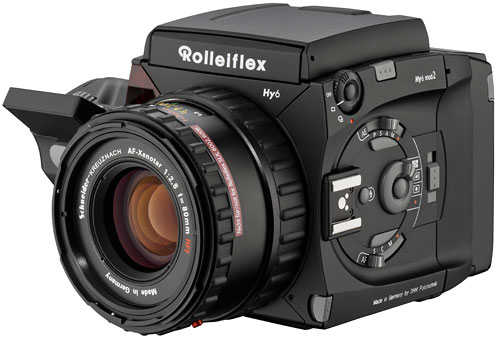
They also introduced a new version of their Hy6 model


Although the image shows the digital back the camera can accept a roll film back giving studio photographers the option of shooting film as well as digital.

New 110 Films from Lomography


Lomography Tiger Colour & Orca Black and White 110 Films


All you 110 camera fans can now rejoice with the introduction of these new films from our favourite low-fi vendor, further info can be found on the Lomo website
Lomography also introduced several new cameras a 110 fisheye plus a LC-Wide compact camera with with a 17mm lens–Link here. Also interestingly a Lomokino movie camera:


 The camera will take a 144 frame move on any 35mm film link here

Impossible Project PX 70 film


The new PX 70 and PX 680 Colour Protection film Impossible takes a huge step in terms of ease of handling and image quality. An innovative colour protection formula improves the opacification process, finally allowing for easy shooting without the need for immediate shielding of the photos.


© Photo Utopia 2012

Saturday, September 08, 2012

Goodbye Fotokemika

A 1980's Roll and the current EFKE/Adox

With all the attention focussed on Kodak's recent decision to sell their film business, the news Fotokemika (EFKE and Adox film brands) have decided to cease production may have slipped under the radar for some people.

Fotokmika have been making a range of films and papers since the 1960's when they bought the machinery (but not the trade name) from Adox.
My previous post outlines the company history for those inclined here.
The coating machine was made in the 1950's and pretty much the film produced on it is unchanged from that period and made to the original Dr. Shleussner formula.

A box of 1957 R17
Recently Fotokemika made the distributor aware that they had problems with their coating machine which needed to be repaired, after consideration I think they decided although they could fix the machine, that their business margins were so thin they feel they have to cease all production.

Possibly the factory site is worth more money than they can hope to earn from film so they have decided to cash in their assets.

For most photographers that used these films that is a great shame, they were unique and has a very different look from modern films.

I have been using them various guises since the early 1980's anyone in the UK will surely remember Jessop pan in the plain white boxes for just a pound.

I particularly loved the 50 ISO version of this emulsion, which had smooth tones and  easier to tame and more forgiving than the 25 version.
I will miss the films very much, at the same time I'm grateful for being able to use them for the last 30 years.

©Photo Utopia 2012


Friday, August 24, 2012

Keep it–with Kodak


This morning over breakfast I learned that Kodak's current management team are divesting themselves of their chief asset and for most people their most recognisable product–their film division.

The current state
Kodak over the last 10 years have consolidated the production plant, it is now the most efficient film coating facility in the world–it can't downsize any more because only building 38 is left as far as I know they have two coating lines–the film division is profitable.
Edit: Kodak are still making film, they haven't 'killed it off' like some people in digital camera forums have suggested, production continues while they look for a buyer.

So what next? 
This situation is a make or break one for Kodak Film, the positive being the fracture between top board members who have been hammering the giant into the ground pursuing the consumer ink-jet market and those on the ground who passionately believe in their great product. Once these two have parted company those who run the film division and actually believe in film should be able to reach consumers, meet their needs and hopefully develop the niche.
The negative being that the economy is bad, costs of raw materials like silver are rising pushing up the cost of the end product in a time where people have less disposable income.

Who could buy the division?
It is hard to see another film based company buying the plant with rising costs and sale.
In the current climate no one is going to want to expand, so that leaves us with a venture capitalist possibly backed by money from business or some party with a large interest.
But remember how GM nearly collapsed, yet people are buying cars sad fact is people aren't buying so much film–the one player with the best quality product is profitable but not well managed.
The next six months will tell us how it will 'pan' out. (intended pun in quotes) 


© Photo Utopia 2012

Monday, August 13, 2012
The Artist Zacron


The following text and images are a tribute to the artist Zacron whose best known work is the Album cover for Led Zeppelin III.
© Zacron
I recently discovered that my friend the artist died in January of this year, his death wasn't announced until this August which is why I'm only now posting this tribute to him.
I first met him at an artists exhibition about ten years ago, a larger than life character in a white suit and hat. We chatted briefly about art and photography both of which he was notably passionate, about the changes that were happening in the world of photography, digital cameras, photoshop and how this had caused a change in my work.
Later that year we met again at a party where I offered to help him set up a digital workstation in his studio, I still remember his flamboyant 'that would be marvellous' answer to my offer of help in teaching him Adobe Photoshop.
   I spent many hours with him at his studio discussing art and photography as well as helping him learn Photoshop, something he took to like a duck to water. 
He was a very talented guy who worked with all types of media, never shy of learning new methods or mixing them with old ones. He had a keen interest in all sorts of subjects from the artistic education of students through to music and film (he had a fantastic cinema in his house).
He was a kind and thoughtful man, great artist and friend, I will miss him very much–god bless you Richard.

The devil is in the detail
© Photo Utopia 2008
In the workshop
© Photo Utopia 2008

With the famous 'rotator' in the background
© Photo Utopia 2008
Rock & Roll Soul
© Photo Utopia 2008

I took these images back in October 2008 with my Rolleiflex loaded with Neopan 400. 

© Photo's and text Photo Utopia

Tuesday, June 26, 2012

In Praise of Rodinal part II

In my previous Rodinal worshipping post I discussed some of the history and properties of the ancient liquid formula.
In this post I hope to describe some of the harder to define reasons why Rodinal is my developer of choice.

The characteristics of Rodinal
Rodinal is not the finest grained developer in the world, if minimising grain at all costs is your goal then there are better options available. That is not to say it is 'grainy' with care it can give fine grained results similar to developers such as D76/ID11.
 I have heard many photographers over years that have been disparaging of Rodinal based upon it being a 'grainy' developer, I'n not sure this is the case my tests show a more 'tell it like it is' rather than having too many solvents or other grain blunting properties.

My Personal Rodinal Journey
In truth my first impressions weren't that great, not bad but certainly not good enough to displace the Ilfotec HC and Paterson Acutol products that had become my standard.
So what changed my mind?

In the late 1980's UK Photographic firm Jessops started supplying their 'own brand' B&W films which were made by Fotokemika (EFKE) these films were cheap (one pound for a 120 roll).
I really struggled to find a good developer combination, Acutol was about the best but I seemed to get inconsistent results the contrast seemed too high, lowering ASA ratings and times didn't work as I'd hoped.
One day I ran out of Acutol and had to do a shoot of a band on a Sunday afternoon, the only 35mm mono film I had was Jessops KB21, looking in my darkroom cabinet I saw a little 125ml bottle of Rodinal and in a that'll have to do attitude I decided to use the stuff.

I wasn't prepared for the results I obtained, smooth tones, sharp edge definition-surely this couldn't be the cheap 'quid' film I'd been struggling with?
Here are the shots....


With all the other developers I'd got good sharp negatives but I'd never seen mid tones quite as attractive, the combination worked and I'd stumbled upon it.

Rodinal works very well indeed with the traditional cubic type flms like Adox/EFKE especially those in the 25-200 ISO speed group, characterised with high accutance and smooth tones.

Dilutions and their effects on image results


Delta 3200 'pushed' to EI6400 

One of the greatest properties is how well it works at different dilutions, 1:25 which I only use for faster films like Ilford Delta 3200 I feel that this dilution although OK doesn't fulfil the potential and can give slightly grainy results, in fact it might make some users ask 'whats the fuss about this developer".

I feel the best dilution is 1:50. At this dilution Rodinal excels at bringing out a beautiful mid range brilliance, tonally I find it hard to beat as if it somehow provides more separation.
The most amazing property is that at higher dilutions the highlights are without equal, the  way it seems to preserve highlight information as well as the shadow detail is uncanny.
With higher dilutions a compensating effect makes the diffuse highlight (last decernable detail on paper) and the specular highlights which are close to paper white never clash, giving a glow that often makes images look three dimensional.
All this is hard for me to put into words, I see it in the print the following images are an attempt to show this in the digital domain (although monitors may not give you the range, you might just get a rough idea)


Click on the images to get a higher resolution version

Both images on Ilford HP5 400

The images above don't really do the prints justice, but serve to show my points, the white wall and the girls hair are in full sun yet the hair (in the print at least) retains detail.
Likewise the beach scene which although not as bright still retains good highlight separation.

The final dilution I use is 1:100 which brings into play 'edge effects' especially when combined with less agitation, you get them to some degree at the 1:50 but 1:100 with agitation of one inversion per minute really makes them noticeable.

Agitation and the effect on the image
Rodinal has one other incredible property–low agitation causes few or no processing marks. I know of no other developer that lends itself to this technique better, most other developers will suffer from bromide drag (marks from the sprockets or film edges) Rodinal seems much less susceptible in this respect.
In fact I'd go further, it seems to have better highlights-shadow and certainly less grain at higher dilutions with less agitation. I have found a slow roll (rather than complete inversion) for 1 minute followed by a slow rolling 'inversion' every following minute is the sweet spot for me.

Pushing with Rodinal
Yes it can be done, although some feel it isn't suited to this task and may prefer speed increasing developers such as Microphen– Rodinal can actually be quite a surprise.

The secret is to expose for emerging shadow detail then stop down two stops (I'd do this with any negative film developer combo). Once you've exposed correctly a high dilution and low agitation will give good results here is Fuji Acros 100 exposed at EI800 and developed for twenty two minutes at 1:100 with my standard agitation.


The above was shot at 1/8 second with little or no light apart from the standard lamp n.b how the highlights have been retained. Yet you can still see the name of the beer on the glass and some shadow detail.
The most probable effect is one of highlight compensation from the high dilution coupled with low agitation allowing the highlights to exhaust the developer while the shadows 'catch up'

Conclusion
Rodinal is no panacea I don't wish to give that impression, some will decry its portrayal of grain in fast films (which I like) Just try HP5 or Tri-x in a diluted solution it will give superb tonality and a hint of graininess. 
Neopan 400 low light Rodinal 1:50

The developer has many strong points, long life, high dilution, compensating effect, edge effects etc.
Rodinal is a very capable developer, really works well with slow to medium speed films and gives a brilliance of tone in the upper highlight transition.

© Photo Utopia 2012